

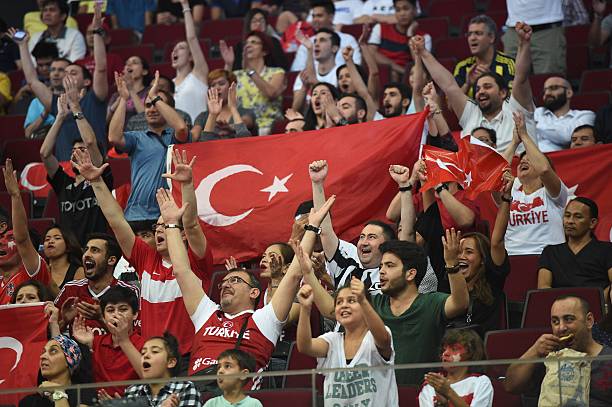
Following the Turkish National Football Team’s early exit from the 2026 FIFA World Cup, public and media criticism has intensified across the country. A new revelation has added fuel to the fire, exposing that the team’s controversial training camp location in Arizona—initially defended by officials as a mandatory assignment by FIFA—was actually accepted voluntarily despite more suitable alternatives.
Turkey mathematically exited the tournament after losing its opening two matches in Group D. The team will play its final group-stage game against co-hosts the United States before heading home. As an inquest into the poor performance begins, the logistics and planning behind the tournament preparation have come under heavy scrutiny.
The “Mandatory” Camp Myth Debunked
Initial justifications from team management claimed that FIFA forced Turkey into utilizing the Arizona Athletic Grounds in Mesa, Arizona—a region dominated by desert landscapes and extreme temperatures known to severely impact human physiology.
However, insider reports reveal that while FIFA suggested the facility, Turkish National Team officials accepted it without any formal objection or counter-proposals.
By contrast, major footballing nations such as Germany, France, Austria, Japan, Portugal, and Spain proactively rejected standard recommendations, choosing instead to procure camp centers tailored to their specific needs.
Financial Sacrifices vs. Elite Comfort
The critical factor behind the decision appears to have been financial. Had Turkey opted to organize its own camp outside of FIFA’s complimentary list, the Turkish Football Federation (TFF) would have been required to cover some of the operational and accommodation costs. Other nations willingly absorbed these extra expenses to guarantee optimal conditions for their squads.
Countries that rejected the pre-assigned FIFA facilities prioritized minimizing travel times between hotels and training pitches, as well as keeping the camp geographically close to the stadiums where their matches were scheduled. Because Turkey failed to make a custom selection, the squad was forced to endure grueling travel distances between their base and match venues.
How World Giants Managed Logistics:
-
Germany: Head coach Julian Nagelsmann prioritized isolating the team, ensuring the squad hotel was exclusively occupied by the German delegation and located a very short distance from the training pitches.
-
Spain: Selected an elite facility focused heavily on privacy and high-level security. Furthermore, their location was strategically chosen just 160 kilometers away from Atlanta, where Spain played its first two matches.
-
France: Opted for Bentley University due to its close 30-minute proximity to the Four Seasons Hotel. Crucially, French officials demanded a training pitch whose turf conditions strictly mirrored those of Gillette Stadium to prepare players flawlessly for matchdays.
As Turkey prepares for its final ceremonial match against the US, the revelations surrounding the preparation camp have shifted the blame from the pitch to the federation’s administrative planning, with fans and pundits questioning why player welfare and ideal athletic conditions were compromised to save on costs.