

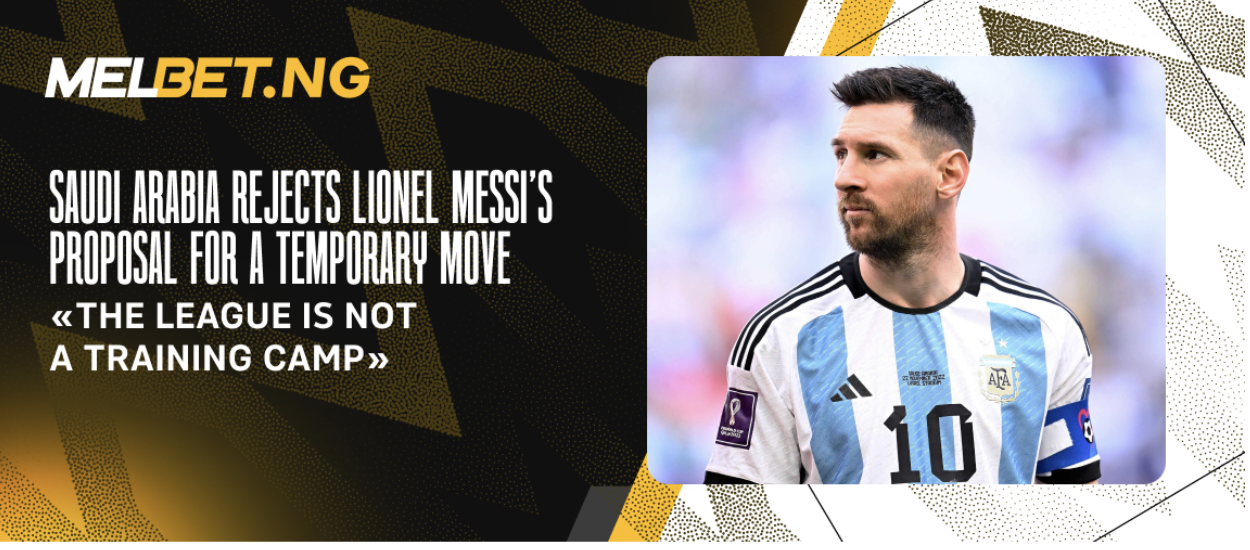
Lionel Messi — widely regarded as the greatest footballer of all time — has reportedly considered a surprising short-term venture to Saudi Arabia during the MLS off-season. According to reports, the Inter Miami captain was exploring a four-month training arrangement to maintain peak fitness ahead of the 2026 FIFA World Cup.
During the Club World Cup, Messi is said to have personally reached out to Abdallah Hammad, the head of the Mahd Academy, one of the kingdom’s leading sports development institutions. The proposal, described by insiders as a «training collaboration» would have allowed Messi to stay in top condition while contributing to the academy’s elite football program.
Although no formal agreement has been reached, the discussions highlight Messi’s relentless commitment to performance — and the continued global demand for his presence, both on and off the field.
But in a stunning twist, Saudi officials swiftly rejected the idea. According to reports, the response was firm and final: «The Saudi league is not a training camp». Even for Messi, there would be no exceptions. The Kingdom, now striving for long-term prestige in global football, refused to entertain short-term deals that do not fit its strategic goals.
The denial, followed by Messi’s contract extension with Inter Miami until 2028, marks a new chapter in his storied career and a clear statement from Saudi Arabia about its football ambitions. Read on to see what this means for both sides — and stay till the end for a special reward from Melbet Nigeria, including a promo code that increases your welcome bonus.
Saudi Arabia’s New Football Identity
Saudi Arabia’s football revolution is one of the most ambitious projects in modern sport. Over the past few years, the Kingdom has invested billions into developing its domestic league, recruiting global stars, and building elite infrastructure. However, this latest decision to reject Messi’s temporary proposal signals a shift in priorities — from visibility to credibility.
The Saudi Sports Ministry’s statement that «the league is not a training camp» reflects a desire for permanence and structure. Officials want players who commit to developing the Saudi Pro League, not merely using it as a fitness stop between seasons. This approach, while surprising to many, shows that the nation is now focused on establishing a professional ecosystem rather than relying on short-term spectacle.
The message is clear: the Saudi project no longer revolves around renting fame — it’s about building a sustainable footballing legacy.
Why Even Messi’s Name Wasn’t Enough
A few years ago, Messi’s arrival — even temporarily — would have been unimaginable to turn down. After all, the Argentine has been the face of global football for nearly two decades. Yet Saudi Arabia’s refusal highlights its evolving confidence. The country has already attracted high-profile players like Cristiano Ronaldo, Karim Benzema, and Neymar, but it now seeks something deeper: long-term investment and competitive balance.
Messi’s proposed short-term training arrangement ultimately clashed with Saudi Arabia’s strategic vision for its domestic league. Accepting the offer might have sent the wrong signal — implying that the Saudi Pro League was merely a temporary showcase for global stars rather than a serious, competitive environment with long-term ambitions.
Officials reportedly viewed the proposal as inconsistent with their broader objectives of building credibility, professionalism, and sustainable growth within the sport. By declining, they reinforced the message that Saudi football is striving for lasting legitimacy — not fleeting spectacle. Instead, the decision reinforces Saudi football’s growing maturity, asserting that prestige must be earned, not borrowed.
In many ways, rejecting Messi’s offer was a calculated statement — one that might shape how the world perceives Saudi Arabia’s ambitions for decades to come.
Messi’s Future Lies in Miami
While Saudi Arabia’s door remained closed, Messi’s current club, Inter Miami, had no hesitation in securing his future. The Argentine icon recently extended his contract until 2028, reaffirming his long-term commitment to Major League Soccer.
Since joining the MLS in 2023, Messi has transformed Miami into a global football hub, both on and off the field. His arrival brought record-breaking viewership, increased attendance, and a surge of youth engagement across North America. Now, with this extension, Messi is set to finish his career in the United States — a fitting end for a player whose influence transcends continents.
His decision also closes the door on potential European or Middle Eastern returns, confirming that his final chapter will be written in pink and black, not green and gold.
Saudi Arabia’s Evolving Football Vision
Saudi Arabia’s rejection of Messi’s proposal, though surprising, underlines the nation’s confidence in its football strategy. What once began as a project driven by marketing has now evolved into a mission rooted in discipline and growth.
The Kingdom’s leadership has repeatedly emphasized that they seek to build a respected, competitive league — one that produces local talent and attracts global audiences. By declining short-term deals, Saudi Arabia signals that it is done with symbolic signings and ready to focus on substance.
This shift marks a defining phase in the country’s sporting evolution: from buying headlines to earning them.
Play Smart. Win Big. Bet with Confidence
Football never stops surprising — and every twist can be an opportunity. At Melbet Nigeria, fans can turn their football insights into smart predictions with competitive odds across the world’s biggest matches. From international tournaments to club fixtures, every game offers a chance to test your intuition and strategy.
Join Melbet.ng today and enter the promo code MELGIFT when creating your account to boost your welcome bonus. Whether it’s Messi’s next goal or the next global upset, make sure you’re ready to play smarter.
Conclusion
Lionel Messi’s short-term offer was a bold move — but Saudi Arabia’s refusal was an even bolder statement. The nation’s clear stance shows that it is no longer chasing celebrity deals but building a respected footballing culture rooted in consistency and ambition.
For Messi, the outcome is far from a defeat. His journey with Inter Miami continues to inspire fans worldwide, proving that even late in his career, he remains a symbol of professionalism and passion.
And for Saudi Arabia, turning down Messi might just be the clearest proof yet that their football project has grown beyond the need for borrowed stars — it’s ready to stand on its own.