

The Future of European Football Fandom in 2026: Digital Ecosystems, Sports Tourism, and Venue Evolution

Image Credit – Gemini
Gone are the days when an individual could simply turn up in a stadium or tune in to a television and watch European football. As the sports business in the world becomes much more professionalized and data-driven, the traditional boundaries of the fan experience have been virtually fused. Sports fandom of the present-day era can no longer be an inactive and narrow-minded activity that is confined to a 90-minute game. Instead, it has become an interactive, continuous, and extensively edited digital and physical experience that transcends national borders.
One of the biggest contributors of the sports tourism industry in the world is football, which has risen to an unbelievable 989.0 billion in 2026. Digital natives like Generation Z and millennials innovate this economic boom by desiring socialization, immersive digital features, and non-border availability. This is a comprehensive discussion of how the European fan of football is being changed by transnational entertainment, digital platforms, and stadium transformation by the year 2026.
The Eradication of Digital Friction and Rise of Unified Ecosystems
In the past, the online experience of a European football fan was very disrupted. Users were forced to experience a fragmented environment of individual applications of mobile tickets, live streaming, merchandise, and social conversation. By the year 2026, leading sports organizations will be forced to shift to unified, single-log digital ecosystems.
When a digital ecosystem is owned by a club or league, the club or league seizes complete control of the relationship with fans. Raw interaction data is converted into personalized experiences and commercial opportunities through artificial intelligence and sophisticated data analytics. The established football clubs are collaborating with international technology integrators to overcome the cultural barriers and establish new standards for fan interaction on the world stage.
The traditional season ticket is also being redefined in this ecosystem approach. The progressive franchises are abandoning the single ticket system for extensive membership programs. Ticketing today is a portal to long-term loyalty, which provides subscription-based access, special privileges, and year-round content, which keeps fans interested.
The Multi-Screen Matchday and Seamless Content Portability
The contemporary matchday experience is much more than just the main TV screen. By 2026, fans are participating in an unending game of app switching, where they use secondary devices to track fantasy football dashboards, forecast goals (xG), and are even discussing in real-time on social media. This is a profoundly rooted multi-screen culture that means that secondary entertainment, such as disciplined digital games and prediction markets, is now becoming shaped by the temporal rhythm of the football game.
With European football fans moving across borders to watch their teams in continental tournaments such as the UEFA champions league, the need to have constant access to these local digital ecosystems is of the essence. In the past, fans were severely restricted by geo-blocking. These barriers have however been broken down with the strong implementation of the European Union Regulation on the Portability of Digital Services. A fan that is on a flight between London and Munich can now stream his or her domestic sports broadcasters and access domesticized digital club platforms without a hitch and it does not break the digital fan experience.
The EUDI Wallet: Harmonizing Cross-Border Identification
One such revolutionary approach to this smooth cross-border consumption is the complete integration of the European Union Digital Identity (EUDI) Wallet. The EUDI Wallet, as required by the eIDAS 2.0 Regulation, is a highly secure cryptographically-supported mobile application that aggregates authenticated personal credentials in a digital vault that cannot be changed.
To the traveling football fan, age verification is the most disruptive implementation of the EUDI Wallet. Having age-gated access to services, be it signing up to an online platform that is regulated or even buying alcohol at an international stadium, was once done through the very tedious process of having to present a physical passport. The EUDI Wallet uses selective disclosure and zero-knowledge proofs. It creates a cryptographic attestation that the user is above the necessary age requirement and does not disclose the exact date of birth or name, ensuring great privacy on a personal level and ensuring high compliance with the regulatory requirements.
The Evolution of the Stadium: 365-Day Sports Districts
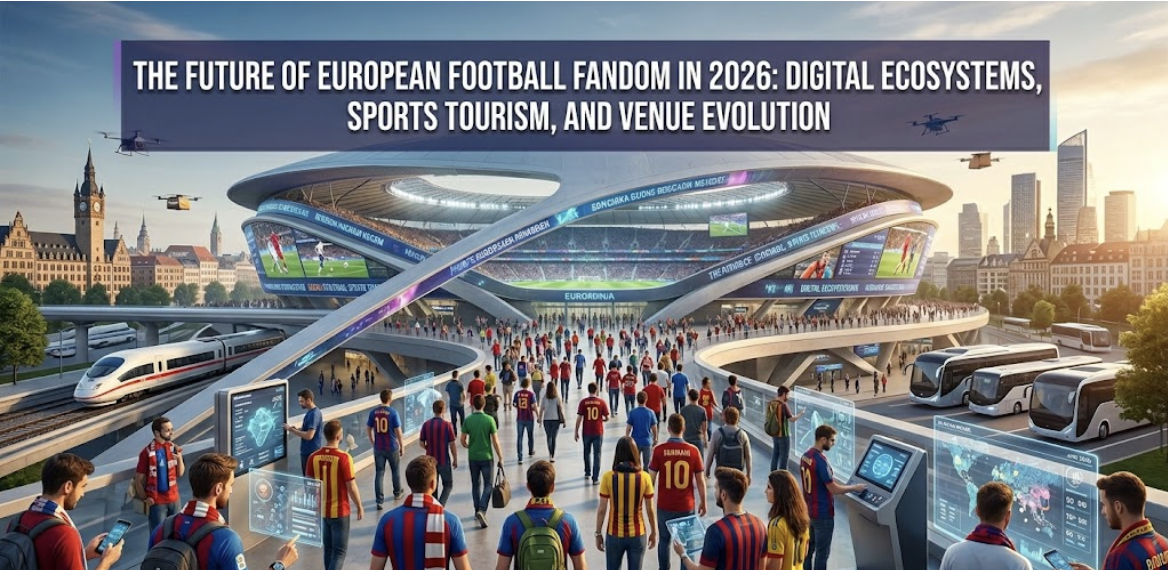
With the change in digital consumption models, the physical structures that accommodate European football are experiencing a radical architectural redesign. The old single-use stadium has been rendered economically useless. A multi-purpose “sports district” is the most common model in 2026.
Stadia have become anchor tenants in large, mixed-use ecosystems, built into the urban fabric. These work-play-stay communities include luxury housing, fine-dining, large-scale retail centers, and transportation centers. This development is the transitioning point between the focus on the traditional Return on Investment (ROI) and Return on Impact, which requires sports districts to operate as dynamic drivers of community resiliency, employment, and overall well-being.
The levels of technological improvements in these venues are also mind-blowing. Virtual Board Replacement (VBR) technology has led to the development of pitch-side perimeter advertising. This AI-driven innovation enables completely different sponsors to be seen at the same time in multiple regional camera images of the same physical LED board, with commercial inventory multiplied many times, and hyper-localized storytelling becoming possible.
Brand Crossover, Nightlife, and the Casino Entertainment Loop
Global entertainment, hospitality, and gaming brands are very influential in supporting the huge cross-border popularity of European football. The population between extreme sports fans and the consumption of high-end entertainment is immense. As wealthy football travelers visit international matches in big city centers, their tours are carefully designed to mix high-profile sporting activities with a high-end nightlife.
As a result, most of the largest casinos in Europe are among the key beneficiaries of this football tourism ecosystem. Host cities and European capitals are fighting to secure the lucrative overspill of the mega-events. A trip to a match in the Premier League in London at the weekend can often be topped off with a trip to a gaming mecca in Leicester Square or Mayfair.
Likewise, host cities also use their historic infrastructure to appeal to the sports tourist market. Casinos such as the Casino de Monte-Carlo in Monaco or the luxurious Casino Estoril in Portugal offer the up-market, high-end excitement that travelling fans desire. The physical excitement of going to the highest casinos of Europe offers an extension, a luxurious one, of what the fans experience in their daily digital space, forming an entertainment loop that can be traced to the digital and physical space in a seamless and continuous manner.
Mega-Events: The 2026 UEFA Champions League Final in Budapest
The macroeconomic effect of this new wave of fandom is best summed up by the UEFA Champions League Final on May 30, 2026, which will be held in the 67,000-capacity Puskas Aréna in Budapest. The Hungarian capital is turned into a multi-day international cultural and corporate hospitality festival with this event.
The urban plan entails careful geographical mapping, with the provision of mega fan areas to traditional fans, as well as serving high-net-worth fans with tailor-made VIP packages. These luxury packages include premium seating, airport transfers, luxury hotel credits, and customized cultural experiences. This flow of excessive wealth naturally spills into the surrounding luxury entertainment industry, where high-end entertainment venues exploit the influx of international tourists by creating highly localized, matchday-specific promotions.
Conclusion
European football 2026 has managed to unplug itself from the spatial constraints of the stadium and the time constraints of the traditional match calendar. Fandom has become an omnipresent, extremely personalized digital reality with grandiose physical mega-events as its foundation. The antique conflict of international fanaticism has been eliminated through the smooth integration of the new technology, legislative digital portability, and the development of 365 days of sport districts. The game of football is no longer only an athletic contest but a final global entertainment platform of cross-border and unstoppable technological advancement.